
Tips for Renovating Your Home While Living There
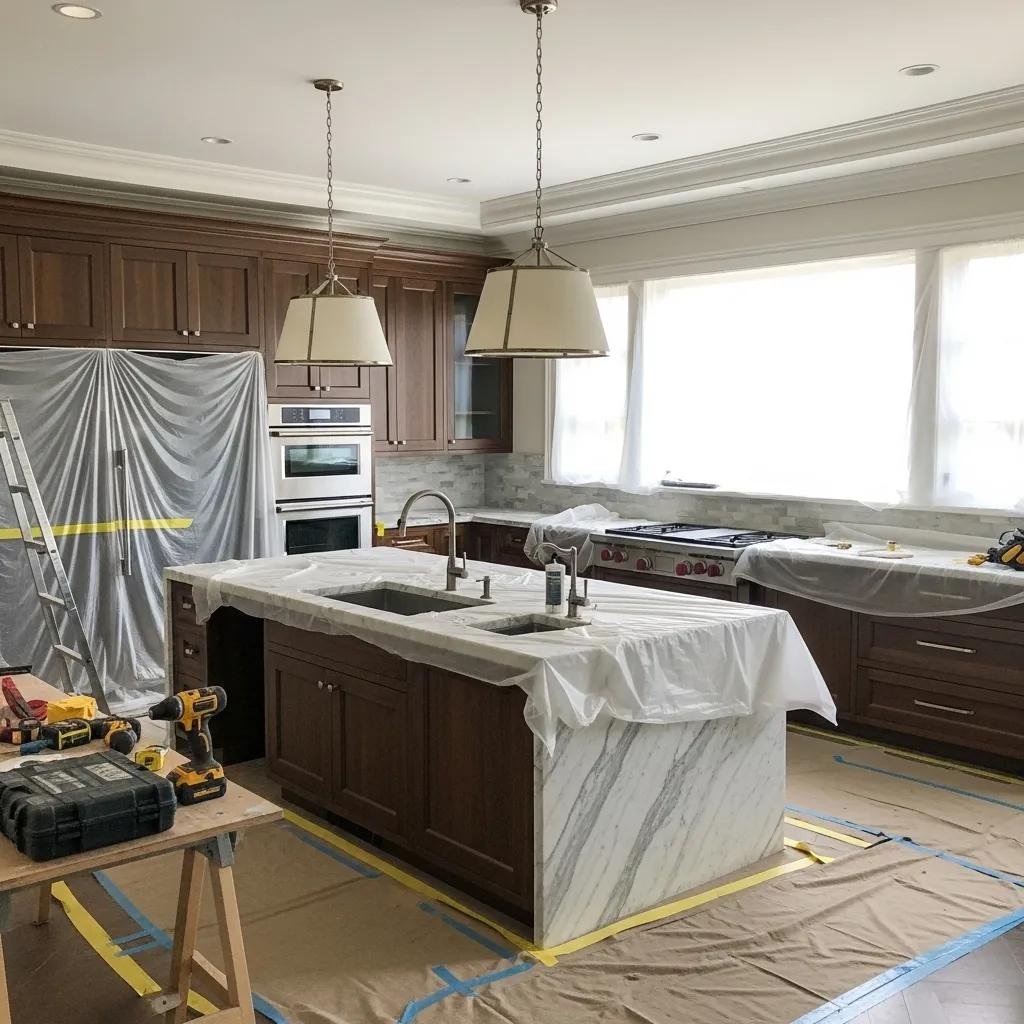
Living Through a Luxury Remodel: Practical Strategies to Protect Your Home and Keep Life Running
Renovating a luxury home while you live in it brings specific challenges: dust that finds its way into stone veins, noise that interrupts routines, and the constant effort to shield premium finishes without halting daily life. This guide gathers contractor-tested tactics to keep disruption low and protection high. You’ll find clear methods for managing dust and noise, intentional temporary kitchen and bathroom setups, communication practices that prevent surprises, and straightforward ways to safeguard valuables, family members, and pets. Each section breaks the issue into actionable steps, recommended tools, and compact comparison tables so you can choose solutions that fit your schedule and budget. The advice targets upscale kitchens, baths, fine tile, and premium flooring but applies to any occupied remodel. Use the checklists, quick-reference tables, and communication templates here to reduce stress and keep your home functioning through construction.
How do you minimize dust and noise during a luxury home remodel?
Controlling dust and noise combines containment, filtration, and smart scheduling so sensitive finishes remain protected and the house stays liveable. Containment uses sealed partitions and zipper doors to stop migration; filtration relies on HEPA air scrubbers and negative-air equipment to cut airborne particulates; scheduling concentrates the messiest, noisiest work into short windows to limit repeated disruption. The objective: prevent abrasive grit from reaching marble, natural stone, lacquered cabinetry, and other high-end surfaces. Use the checklist below to confirm your contractor’s plan before work starts.
- Inspect and seal HVAC returns and vents in the work area to stop dust spreading through the system.
- Install zip-wall or temporary framed barriers with zipper doors at every construction threshold.
- Position HEPA air scrubbers and negative-air machines inside containment and slightly outside to establish pressure differentials.
Use this checklist when comparing proposals to ensure containment and filtration are priorities. The next section helps you evaluate specific containment approaches.
What dust-control strategies work best for occupied remodels?
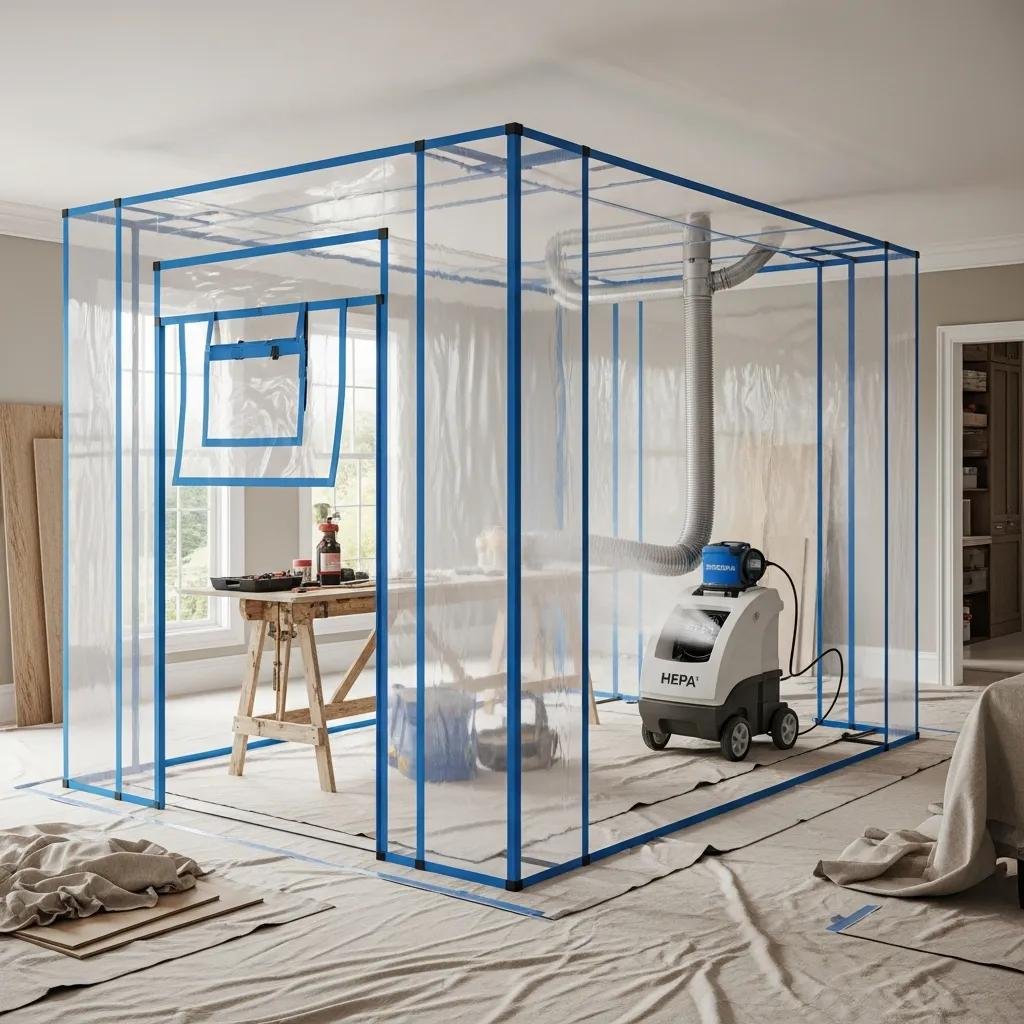
Effective dust control relies on physical barriers, mechanical filtration, and disciplined cleaning routines to protect finishes and indoor air quality. Zip-wall systems create a continuous plastic partition with framed supports and zipper access; taped and sealed doors using thick polyethylene work for smaller scopes. Both limit cross-contamination and let work continue without evacuating the house. HEPA air scrubbers and negative-air machines remove fine particulates—place intake inside the containment and exhaust outdoors or through sealed ducts to maintain negative pressure. Daily wet-wiping of horizontal surfaces, microfiber vacuuming with HEPA-rated vacuums, and protective coverings over countertops and floors prevent abrasive dust from scratching marble or engineered materials.
Match containment and filtration to project size and finish sensitivity. Next, use scheduling to reduce noise impacts.
How should noisy work be scheduled to limit disruption?
Schedule noisy trades to reduce perceived disruption by clustering loud work and providing predictable quiet periods. Combine major-noise tasks—demolition, tile removal, primary plumbing cut-ins—into consecutive days so occupants face one concentrated disruption instead of recurring interruptions. Share a simple noise calendar listing planned noisy activities and windows, post it in common areas, and distribute it digitally. When possible, request quieter tools or phased approaches—use dust-minimizing demo tools and schedule sanding late so cleanup can occur overnight.
- Cluster noisy trades into short blocks to avoid repeated disturbances.
- Share a noise calendar with advance notice and daily windows for affected areas.
- Request quieter tool options or phased work to preserve household routines.
Clear scheduling cuts surprises and supports dust control—and it sets the stage for temporary living setups that keep comfort intact.
What temporary living solutions are essential during kitchen and bathroom remodels?
Temporary living solutions preserve daily routines and a sense of luxury while permanent spaces are offline. A functional temporary kitchen focuses on safe hot-food prep, dishwashing, and refrigeration without exposing premium cookware to dust. Temporary bathroom options deliver privacy, hot water, and sanitation with minimal plumbing interruption. Storage, protected access routes, and daily maintenance matter to keep family life stable and finishes safe. The checklist below outlines essentials to arrange before demolition.
- Designate a temporary kitchen zone with a countertop, induction hotplate, microwave, mini-fridge, and a clear cleanup workflow.
- Provide at least one full bathroom alternative or reliable portable shower/toilet and schedule water shutdowns in advance.
- Protect valuable cookware and serveware with archival covers or store off-site if possible.
These essentials keep routines steady. The following section walks through appliance choices and layout tips for a temporary luxury kitchen.
How do you set up a functional temporary kitchen in a luxury home?

A successful temporary kitchen balances convenience with protection for high-end cookware and surfaces using compact, efficient appliances and strict cleaning practices. Prioritize an induction hot plate or countertop induction unit for safe, fast cooking; add a microwave and a mini-fridge for perishables, and consider a portable dishwasher where power and hookups allow. Protect prep surfaces with heavy-duty plastic and cutting boards to prevent stains and scratches, and keep valuable items sealed or off-site to avoid dust exposure. Batch cooking and simple menus reduce appliance switching and limit cleanup, helping preserve finishes and routines.
Use this comparison to choose appliances based on space, power, and convenience. Scanbuild LLC designs temporary kitchen and bathroom plans for luxury remodels—contact us for a setup tailored to your project using the phone or email at the end of this article.
How do you maintain bathroom comfort and hygiene during remodeling?
Maintaining bathroom hygiene requires planning for reliable hot water, privacy, and sanitation so daily routines continue. Portable showers and temporary toilets can be staged in utility or guest areas with simple privacy screens and floor protection to shield adjacent finishes. Coordinate water shutdowns in advance, stage handwashing stations and supplies for comfort, and follow daily cleaning protocols for temporary fixtures to prevent odors and bacterial buildup. A clear access schedule, communicated to household members, minimizes conflict and keeps expectations aligned during disruptive phases.
- Provide a dedicated temporary toilet/shower location with privacy screens.
- Plan water-shutdown windows and notify occupants ahead of time.
- Maintain daily cleaning and offer hot-water handwashing stations.
These steps preserve hygiene and comfort and lead into communication practices that keep the project transparent.
How can you communicate effectively with your contractor for a smoother renovation?
Effective communication is structured, documented, and regular—so everyone stays aligned and issues are resolved quickly. Start by defining project phases, timelines, and impacted areas, then set a cadence for check-ins and designate a clear emergency contact. Combine brief daily updates for affected occupants with weekly milestone meetings that include photos and progress notes so changes and decisions are visible. A formal change-order process and an escalation path prevent scope creep and ensure requests are evaluated for cost and schedule impact before implementation.
- Designate a single project manager as the main contact and agree on weekly milestone reviews.
- Use photos and short videos for remote transparency and progress records.
- Establish a formal change-order workflow and an escalation path for unresolved items.
Documented communication reduces anxiety and creates predictable project rhythm. Scanbuild LLC’s design-build approach includes project manager check-ins and digital tracking—contact us using the details below to discuss integrating this into your project.
What are best practices for setting expectations and regular check-ins?
Start with a kickoff meeting that outlines phases, access rules, and protection measures so occupants know what to expect from day one. Hold short daily check-ins for people in directly impacted areas to address immediate concerns and weekly milestone meetings to review progress, upcoming trades, and decisions. Use photo and short video logs to preserve transparency and reduce unnecessary site visits—those visuals become an audit trail. Define decision points and approval authority up front to avoid delays and confusion during construction.
This framework keeps everyone aligned and leads into how to efficiently manage changes and concerns.
How should you handle concerns and change requests during the project?
Address concerns quickly with a simple written change-request process: document the issue with photos and a timestamp, submit a change request describing scope and desired outcome, and have the contractor respond with cost and schedule impacts. Keep an escalation chain—project manager, lead contractor, owner—so unresolved items move up promptly, and set short decision windows to avoid cascading delays. When disputes arise, rely on the photo log and documented notes to clarify agreements. Prompt documentation and a formal change-order system reduce scope creep and help keep the remodel on track while you live in the home.
- Document concerns immediately with photos and timestamps.
- Use a formal change-order to record cost and time implications.
- Follow an escalation path for unresolved or urgent issues.
These steps clarify responsibility and protect your schedule and budget while preserving everyday life during the project.
What packing and safety measures should you use while living through a remodel?
Smart packing and safety protect valuables, keep family routines intact, and reduce risk when work zones and living areas overlap. Prioritize archival packing for artwork and climate-controlled off-site storage for sensitive pieces; use plywood overlays and protective films for finishes that remain. Designate clean zones away from work areas for children and pets, and run daily cleanup and inspection routines to remove nails and debris. Verify insurance coverage, label boxes clearly, and keep an accessible essentials kit so life stays manageable and damage risk is minimized.
- Create secure storage for artwork and electronics with clear labels and a central essentials box.
- Protect in-place surfaces with plywood or temporary coverings matched to the finish.
- Designate kid- and pet-free zones and perform daily safety sweeps.
These precautions preserve value and safety and lead into targeted packing and protection recommendations.
How do you organize and protect high-value items during renovation?
Start with the right packing materials, clear labeling, and a decision about on-site protected zones versus climate-controlled off-site storage based on sensitivity. Use archival-grade wraps for artwork and consider climate-controlled storage for antiques or humidity-sensitive pieces; in-home protection for marble and counters should include foam-backed plywood, while wood floors benefit from rosin paper and reinforced runners. Build an inventory with photos and store that inventory separately so you can verify condition after the project. Keep a daily-access “survival kit” with medications, chargers, and a few dishes to avoid repeatedly opening packed storage.
Use this quick reference to protect common high-value items, then apply the family and pet safety measures below.
How do you keep family members and pets safe around construction zones?
Keep family and pets safe by creating physical separation, running routine safety checks, and setting clear rules to prevent accidents and dust exposure. Install temporary gates and sealed doors to block access to active zones, perform daily debris removal with a HEPA vacuum, and secure nails and small fasteners immediately after trade work. Maintain routines by providing alternate play and rest areas with clean air and predictable schedules so children and pets stay comfortable. Communicate house rules to the crew—no open food, tool storage protocols, and where cleaners should leave equipment—to maintain a consistent safety culture.
- Designate safe, dust-free zones for children and pets with clear barriers.
- Perform daily cleanup and safety sweeps to remove loose nails and debris.
- Provide alternate spaces and routines so family life remains predictable.
These measures round out the safety plan for living through a remodel while protecting people and prized possessions.
Scanbuild LLC — a luxury design-build resource serving the Washington, D.C. metro area — can advise on protective strategies and provide project-level planning; contact Scanbuild LLC at +1-240-374-8844 or by email at scanbuildllc@gmail.com to schedule a consultation or site assessment.
Frequently Asked Questions
What should I consider when choosing a contractor for my luxury home renovation?
Choose a contractor with proven experience on high-end projects. Review a portfolio of similar work and check client references for workmanship and communication. Confirm they understand luxury materials and complex schedules, and verify licensing, insurance, and any specialty certifications. A reliable contractor will provide a detailed proposal that clearly outlines costs, timelines, and project phases so there are no surprises.
How can I prepare my family for living through a renovation?
Prepare your family with clear, practical communication and set expectations early. Explain the timeline, likely disruptions, and safety measures. Create a dedicated safe zone away from work areas, establish a routine that accommodates the construction schedule, and plan meals and bathroom access. Involve children in age-appropriate ways so they know what to expect—this reduces stress and keeps a sense of normalcy.
What are the best ways to protect my furniture and belongings during a remodel?
Move items out of the work area when possible and use high-quality packing materials for fragile pieces. Consider climate-controlled storage for valuable items. For in-place protection, cover furniture with heavy-duty plastic or moving blankets and protect floors and countertops with plywood or protective films. Label packed boxes clearly and check stored items periodically during the project.
How can I maintain a clean environment during the renovation process?
Maintain cleanliness with proactive daily routines: HEPA vacuuming, damp-wiping surfaces, and scheduled site cleanups. Assign a cleanup crew or daily tasks so responsibility is clear. Use air purifiers with HEPA filters to improve indoor air quality and inspect the site regularly for hazards and debris. Keep communication open with your contractor about cleanliness standards and expectations.
What are some common mistakes to avoid during a home renovation?
Avoid underestimating the budget and timeline and failing to communicate clearly with your contractor—both create avoidable stress. Plan for temporary living arrangements so daily life isn’t derailed. Don’t make impulsive design changes without considering their impact on budget and schedule. Finally, ensure you understand the renovation process so surprises are minimized.
How can I ensure my renovation stays on budget?
Start with a detailed plan that outlines goals, priorities, and a realistic budget. Set aside a contingency fund of 10–20% for unforeseen items. Communicate budget limits to your contractor and request regular cost updates. Be prepared to prioritize or substitute materials if needed, and minimize changes once work begins—late changes are the most common cause of overruns.
Conclusion
Managing a luxury remodel while living on-site is achievable with thoughtful planning and clear standards. Prioritize dust and noise control, set up intentional temporary living solutions, and keep communication structured and documented. Those steps protect your high-end finishes and preserve daily life through construction. For tailored guidance on your project, reach out to Scanbuild LLC.
Recent Comments