
Top Local Bathroom Designers in Your City
Top Bathroom Designers in Washington, D.C. — Expert Luxury Remodeling Services
Washington, D.C. homeowners planning a high-end bathroom remodel need a clear, practical guide to local designers who deliver lasting luxury, smart function, and strong resale value. This piece walks through the leading designers and design‑build firms across the D.C. metro area, defines what a luxury bathroom remodel includes, summarizes typical cost ranges, and shows how to choose the right professional for your project. Translating a style idea into a buildable plan that meets code, budget, and schedule is one of the most common homeowner challenges — this guide explains how designers, contractors, and suppliers coordinate to resolve those issues. You’ll get an overview of the market, the materials and smart features worth prioritizing, realistic pricing brackets, and practical selection criteria to vet professionals. Read on for comparison tables, checklists, and next steps to evaluate portfolios and get an accurate estimate for a bespoke D.C. bathroom remodel.
Who Are the Leading Bathroom Designers in Washington D.C.?
The area’s top bathroom designers blend interior sensibility with construction experience to create cohesive luxury remodels. Providers include independent design studios, specialists focused on bathrooms, and full design‑build contractors who handle permits, trades, and finishes. A “leading” designer typically shows a consistent portfolio of high‑end work, strong client reviews, reliable material sourcing, and the ability to coordinate plumbing, electrical, and tile work for complex primary‑bath projects. Use the short checklist below to compare local talent before you review firm profiles and vendor partnerships.
- Portfolio Depth: Seek varied luxury projects with clear before/after photography.
- Technical Coordination: The team should manage MEP coordination and permitting.
- Materials Sourcing: Top designers have access to premium tile, stone, and fixtures.
- Client Communication: Expect clear timelines, a change‑order process, and regular updates.
These points set the stage for the firm profiles and for how a design‑build contractor integrates design and construction, which we cover next.
What Makes Scanbuild LLC a Premier Bathroom Remodeling Contractor?

Scanbuild LLC serves as a lead and information hub for design‑build remodeling across the Washington, D.C. metro area, including Rockville, Bethesda, Potomac (MD), Vienna, McLean, Alexandria (VA), and Georgetown and Friendship Heights (DC). Our model prioritizes coordinated design‑build workflows to reduce handoffs between designer and contractor — smoothing permit approvals, tightening schedules, and simplifying material sourcing for premium finishes like high‑end tile and luxury vinyl. We also partner with suppliers such as Mosaic Tile Co. to curate material options and offer bathroom packages that run from basic refreshes to fully custom, premium transformations. Homeowners can request an estimate or review package options by phone or email.
This package snapshot shows Scanbuild’s structured offerings while keeping the focus on the broader market comparison that follows.
How Do Local Designers Like Maryam Tavosi and Ruth Gorland Enhance Bathroom Designs?
Independent designers such as Maryam Tavosi and Ruth Gorland (representative examples of local talent) emphasize custom detailing, tailored millwork, and layered lighting to create bathrooms that reflect a client’s lifestyle and the constraints of the space. Their process typically prioritizes spatial planning — improving circulation, sightlines, and natural light — and choosing fixtures or tile patterns that act as focal points. These designers work alongside contractors and suppliers: they specify materials, produce drawings, and oversee selections while the design‑build partner handles structural and MEP implementation. Recognizing a designer’s signature — whether layered texture, integrated storage, or bespoke vanities — helps homeowners match aesthetic goals to functional needs before budgeting and contracting.
What Are the Key Features of Luxury Bathroom Remodels in Washington D.C.?

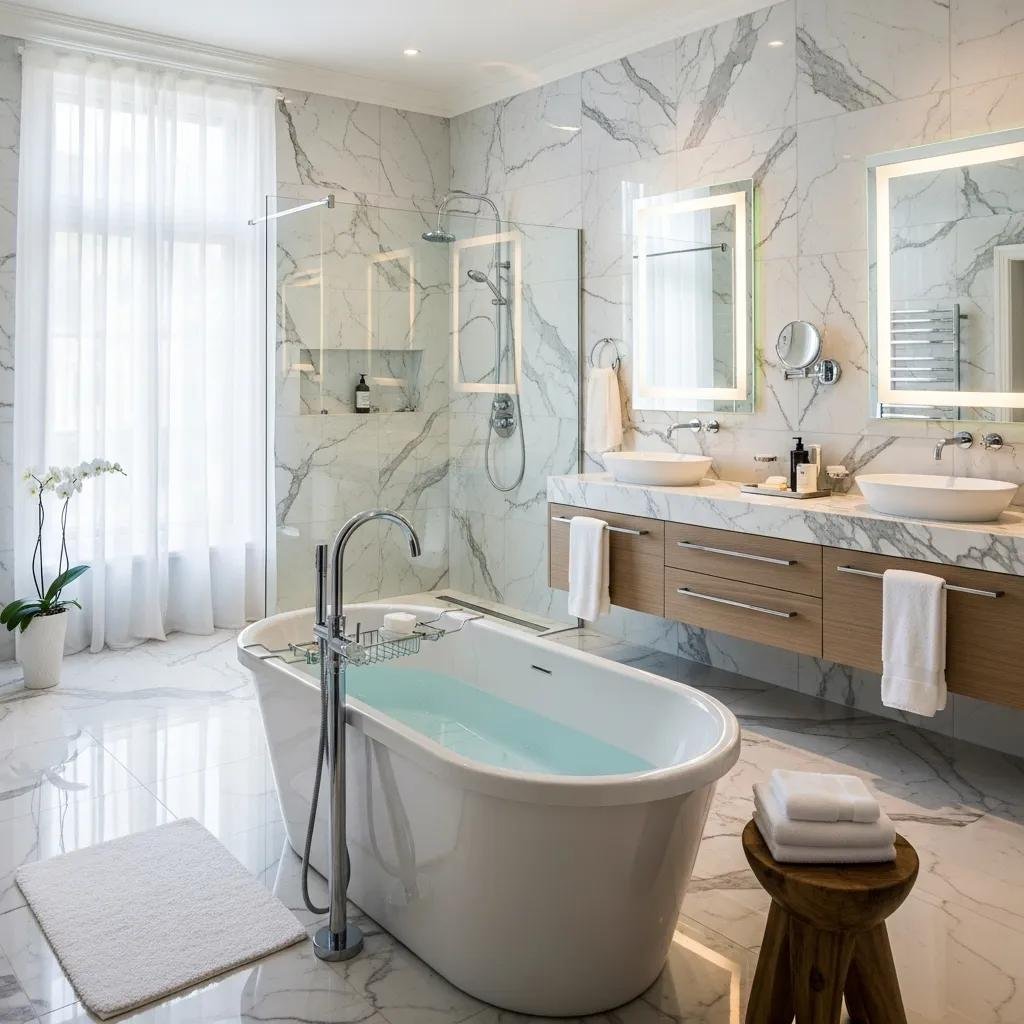
Luxury bathrooms in Washington, D.C. combine high‑quality materials, spa‑level amenities, and smart controls that enhance daily comfort and long‑term value. Features that typically mark a project as “luxury” include freestanding tubs, curbless walk‑in showers with multiple heads, heated floors, custom millwork, and high‑performance ventilation and lighting. Material choices such as marble, large‑format porcelain, and engineered quartz paired with premium fixtures and thermostatic valves provide both visual impact and durability. The table below helps homeowners weigh durability, cost, and aesthetic effect when planning finishes.
- The primary luxury features to consider include:
- Freestanding or soaking tubs: Establish a focal point and support relaxation.
- Curbless showers with multiple showerheads: Enhance accessibility and deliver a spa feel.
- Heated floors and towel systems: Add everyday comfort and perceived luxury.
- Ambient and layered lighting: Combine task, accent, and dimmable layers for flexible mood control.
These features inform material selections and system integration, which we discuss next.
Which High-End Materials and Fixtures Define Luxury Bathroom Renovations?
Choosing materials and fixtures requires balancing look, upkeep, and budget to achieve lasting luxury. Marble provides classic richness but needs more maintenance and sealing; large‑format porcelain mimics stone with higher stain resistance and lower upkeep. Quartz and engineered surfaces give durable, non‑porous countertops for vanities, and luxury vinyl tile (LVT) offers a warm, water‑resistant flooring alternative where natural stone isn’t practical. Scanbuild’s supplier partnerships, including Mosaic Tile Co., make premium tile selections and installation guidance more accessible so finishes meet both design intent and performance needs.
This comparison clarifies trade‑offs so you can prioritize low‑maintenance performance or high visual drama when selecting finishes.
How Do Spa-Like Amenities and Smart Technologies Elevate Bathroom Designs?
Spa amenities and smart systems turn daily routines into restorative experiences while adding real resale appeal. Consider steam showers, programmable thermostats for radiant floors, smart mirrors with integrated lighting and defogging, and touchless faucets — all of which increase comfort and can reduce energy use when tied to smart controllers. Practical examples include thermostatic shower valves for steady water temperature and scene‑based lighting controls to set mood and improve safety. These investments improve daily life and help your property stand out in the D.C. market, where buyers increasingly expect modern, well‑specified homes.
How Much Does a Luxury Bathroom Remodel Cost in Washington D.C.?
Costs for luxury bathroom remodels in Washington, D.C. vary by scope, materials, and structural work. Typical high‑end projects start in the mid five‑figure range and can reach six figures for full primary‑bath transformations. As a quick guideline: smaller luxury remodels often begin around $20,000–$40,000; many primary‑bath projects fall between $40,000 and $90,000; and large, highly customized primary baths can exceed those amounts. The table below gives example scopes and ranges to help with early budgeting — keep in mind a precise quote requires an on‑site assessment and permitting review.
- Quick price breakdown for clarity:
- Small ensuite refreshes: lower‑end luxury upgrades and material refreshes.
- Primary‑bath remodels: layout changes, premium tile and fixtures, MEP work.
- High‑end custom projects: structural changes, bespoke millwork, and top‑tier finishes.
This pricing overview leads into the detailed example table below.
This example pricing provides a transparent starting point; remember that a site visit is required for an accurate estimate. Scanbuild offers consultations and package options to refine costs based on scope and finish level.
What Are Typical Price Ranges for High-End Bathroom Renovations?
Price brackets depend on scope and finish choices: an ensuite refresh with upgraded tile and fixtures sits at the lower end of the luxury spectrum, while a complete primary‑bath overhaul with custom details occupies the higher range. Key cost drivers include plumbing relocation or structural changes, choice of stone or custom millwork, luxury fixtures and hardware, and specialized tile installation. Budget for contingencies and permit fees, which are common in older D.C. homes. For tailored pricing and to explore Scanbuild’s basic‑to‑premium packages, request a consultation and estimate.
What Financing Options Are Available for Bathroom Remodeling Projects?
Financing a remodel depends on your timeline, interest rates, and available equity. Typical options include personal loans with predictable monthly payments, home equity loans or lines of credit (HELOCs) that often carry lower rates when you have sufficient equity, and contractor‑offered financing that may provide staged payments tied to milestones. Each option has trade‑offs around interest, repayment terms, and impact on home equity — compare offers and consult a financial advisor. Scanbuild can discuss financing pathways during your consultation to align scope with a feasible payment plan.
- Common financing options include:
- Personal loans: Fast approval and fixed payments.
- Home equity loans/HELOCs: Often lower interest when equity is available.
- Contractor financing: Project‑specific plans and staged payment schedules.
These financing choices lead naturally into the selection criteria for choosing the right local designer and contractor.
How Can Homeowners Choose the Right Bathroom Designer in Washington D.C.?
Selecting the right bathroom designer in Washington, D.C. means evaluating relevant experience, portfolio fit, communication style, and warranty or insurance coverage. Follow a structured selection process: request detailed portfolios with project scopes, verify licensing and insurance, ask for references or neighborhood‑specific examples, and confirm a transparent change‑order and payment policy. The section below outlines the typical design‑build workflow so you know what to expect and how to coordinate decisions and approvals.
- Experience with similar scopes: Prioritize designers who’ve completed comparable primary‑bath projects.
- Clear process and timeline: Make sure the firm provides milestones and a communication plan.
- Verified references and photos: Review before/after images and client feedback.
- Licensing and insurance: Confirm contractor licensing and insurance coverage.
These decision factors lead into the detailed design‑build process below.
What Is the Bathroom Remodeling Design Process with Local Experts?
A typical design‑build workflow in the Washington, D.C. area follows these phases: initial consultation and site assessment; schematic and final design with finish selections; permitting and scheduling; construction with regular progress reviews; and final punch‑list and commissioning. Timeframes depend on scope — small refreshes may take a few weeks, while full luxury primary‑bath remodels often run several months when permitting is included. Homeowners are usually responsible for timely finish decisions; the design‑build team coordinates subcontractors, inspections, and quality checks. Understanding the process reduces surprises and helps keep the project on budget and on schedule.
How Do Client Testimonials and Project Portfolios Inform Your Decision?
Client testimonials and portfolios are strong trust signals: they show consistent quality, problem‑solving, and delivery on schedule. When reviewing portfolios, look for before/after photos, clear descriptions of scope and challenges, notes about building or neighborhood type, and client comments on communication and project management. Ask for references or, when possible, visit completed projects to inspect workmanship and finishes. Scanbuild maintains project portfolios and local presence — call or email to request portfolio materials, schedule a consultation, or find our Google Business Profile to read reviews and confirm service area coverage.
- Portfolio clarity: Projects should list scope, materials, and outcomes.
- Testimonial substance: Look for specifics about timelines, budgets, and responsiveness.
- Relevance: Prioritize examples in similar neighborhoods or building types.
Use these portfolio signals to shortlist designers and arrange site visits to finalize your selection.
Frequently Asked Questions
What should I consider when budgeting for a luxury bathroom remodel?
When budgeting, account for scope, finish level, and any structural or plumbing work. Typical costs range from about $20,000 for smaller luxury upgrades to more than $150,000 for bespoke, high‑end renovations. Include contingencies for unforeseen issues, especially in older homes, and factor permit fees, labor, and necessary electrical or plumbing upgrades. A design consultation will help clarify realistic budget targets based on your priorities.
How long does a luxury bathroom remodel typically take?
Duration varies by scope. Small renovations can take a few weeks; comprehensive primary‑bath remodels often require several months, particularly when permitting is involved. The process includes consultation, design finalization, permitting, and construction — each phase affects the overall timeline. Keep communication open with your design‑build team to manage expectations and any potential delays.
What are the benefits of hiring a design-build contractor for my bathroom remodel?
Hiring a design‑build contractor streamlines the process by combining design and construction under one team. That reduces communication gaps, shortens timelines, and increases accountability for delivering the design intent. Design‑build firms manage permits, subcontractors, and scheduling and generally have established supplier relationships to secure quality materials and fixtures aligned with your goals.
How can I ensure my bathroom design reflects my personal style?
Start by collecting inspiration — photos, magazine clippings, and Pinterest boards help clarify your preferences. Build a mood board with colors, materials, and fixtures you like, then share it with your designer. Open, specific communication about layout, aesthetics, and daily habits lets a designer translate your vision into a functional plan that fits your budget.
What are some common mistakes to avoid during a bathroom remodel?
Common mistakes include underestimating cost, skimping on storage, and overlooking lighting and ventilation. Poor planning can create a beautiful but impractical space. Avoid these pitfalls by working with a designer, setting a realistic budget with contingencies, and prioritizing functionality alongside aesthetics.
Are there eco-friendly options available for bathroom renovations?
Yes. Sustainable choices include bamboo or responsibly sourced flooring, recycled glass tiles, and low‑VOC paints. Water‑saving fixtures such as low‑flow toilets and aerating faucets reduce consumption, and energy‑efficient lighting or smart controls lower energy use. Discuss green options with a designer experienced in sustainable practices to find the right balance of performance and aesthetics.
Conclusion
Turning your bathroom into a luxurious, functional retreat is achievable with the right team and materials. By understanding key features, reliable cost ranges, and the design‑build process, you can make informed choices that boost comfort and property value. Take the next step by exploring our curated list of top local designers and contractors — contact Scanbuild today to schedule a consultation and begin your remodel.
Recent Comments