
Mix & Match: The Essential Guide to Eclectic Luxury Interiors
Eclectic interior design is about curated contrast: thoughtful combinations of eras, cultures, and materials that create a distinctly personal, high-end home. This guide walks luxury homeowners through planning eclectic rooms that feel intentional—not chaotic. You’ll get a clear definition of eclectic style, practical foundation choices, hands-on mixing strategies, and a concise look at how a local design-build partner can bring these ideas to life for Washington, D.C.–area residences. Many owners struggle to pair vintage finds, contemporary silhouettes, and bold textiles without losing balance; the answer is deliberate foundations, repeated motifs, and proportion-minded decisions that work within a renovation. Read on for what separates eclectic from boho or maximalism, step-by-step foundation guidance (including a walls-and-floors comparison), and actionable rules for layering color, pattern, texture, and furniture.
What makes eclectic interior design distinctive—and desirable?
Eclectic design deliberately blends styles, periods, and cultural references into a single, curated composition. It starts with a visual framework—often a dominant color, scale cue, or anchor piece—and then introduces contrasting elements that add interest while staying connected. For luxury homeowners, the main advantage is personalization: eclectic rooms showcase travel finds, family heirlooms, and bespoke pieces while reading as composed and refined. Unlike boho or unfettered maximalism, eclecticism is edit-driven: every addition earns its place. Below are the core traits that make eclectic design compelling for high-end renovations, followed by practical pairing strategies for furniture and decor.
How does eclectic style bring together vintage, modern, and antique pieces?
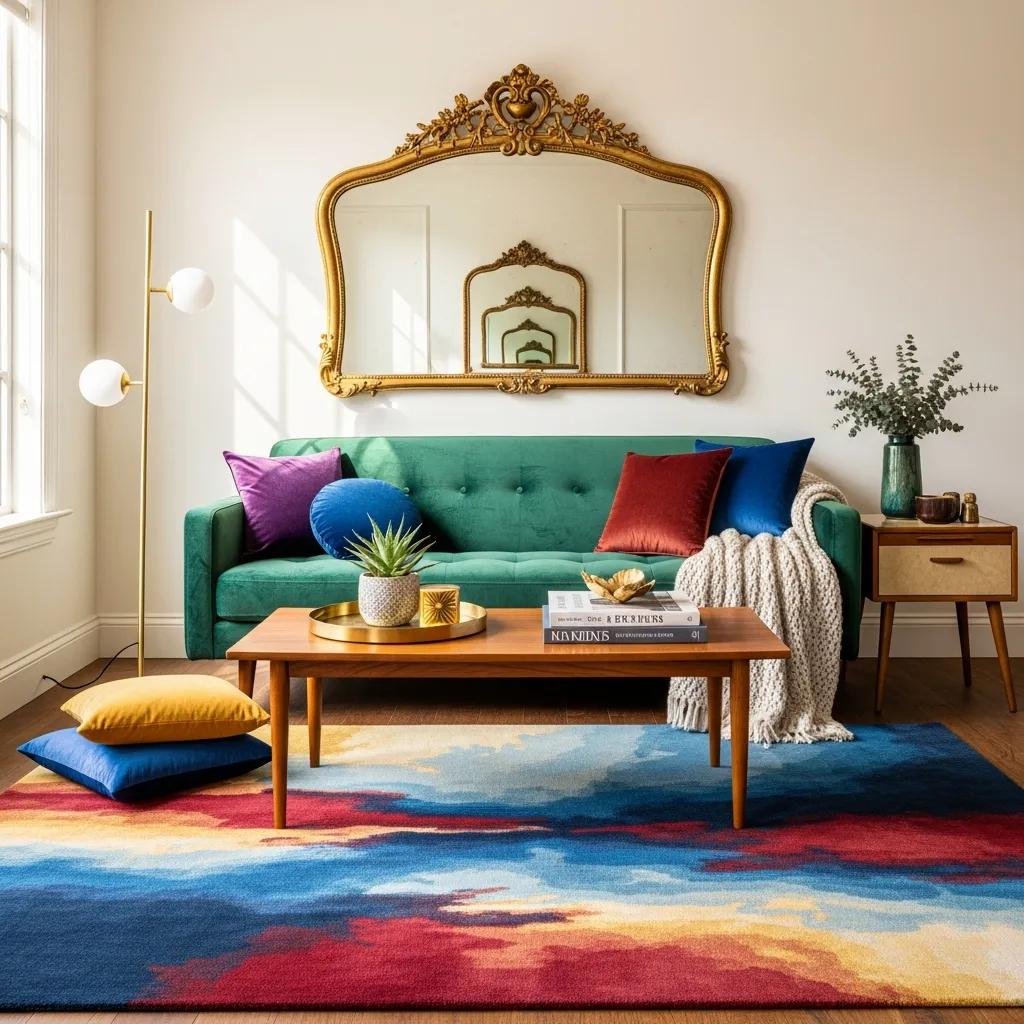
Successful eclectic rooms use one or two anchor pieces to establish scale and tone, then layer contrasting accents for depth and personality. For example: a mid-century sofa can serve as an anchor, with an ornate mirror above and a contemporary rug beneath; repeating a rug color in smaller accessories ties the scheme together. Keep large shapes from overwhelming delicate antiques, and alternate textures—plush velvet next to polished metal or glazed ceramic—to maintain dimensionality. These rules help homeowners merge different eras without visual clutter and guide material and palette choices during a renovation.
What characterizes truly personalized eclectic decor?
Personalized eclectic decor tells a story through objects, curated collections, and meaningful contrasts that reference family, travel, or craft. Hallmarks include layered lighting to spotlight focal pieces, intentional negative space to avoid clutter, and recurring motifs—such as a brass finish or a jewel tone—that run through the room to create cohesion. Practical personalization prompts: dedicate a gallery wall to curated art, group travel finds by material, or select a repeating finish to anchor mixed pieces. These approaches keep eclectic rooms feeling unique and thoughtfully composed, and they point directly to the need for a stable foundation that supports layered styling.
How to build a cohesive foundation for eclectic luxury interiors
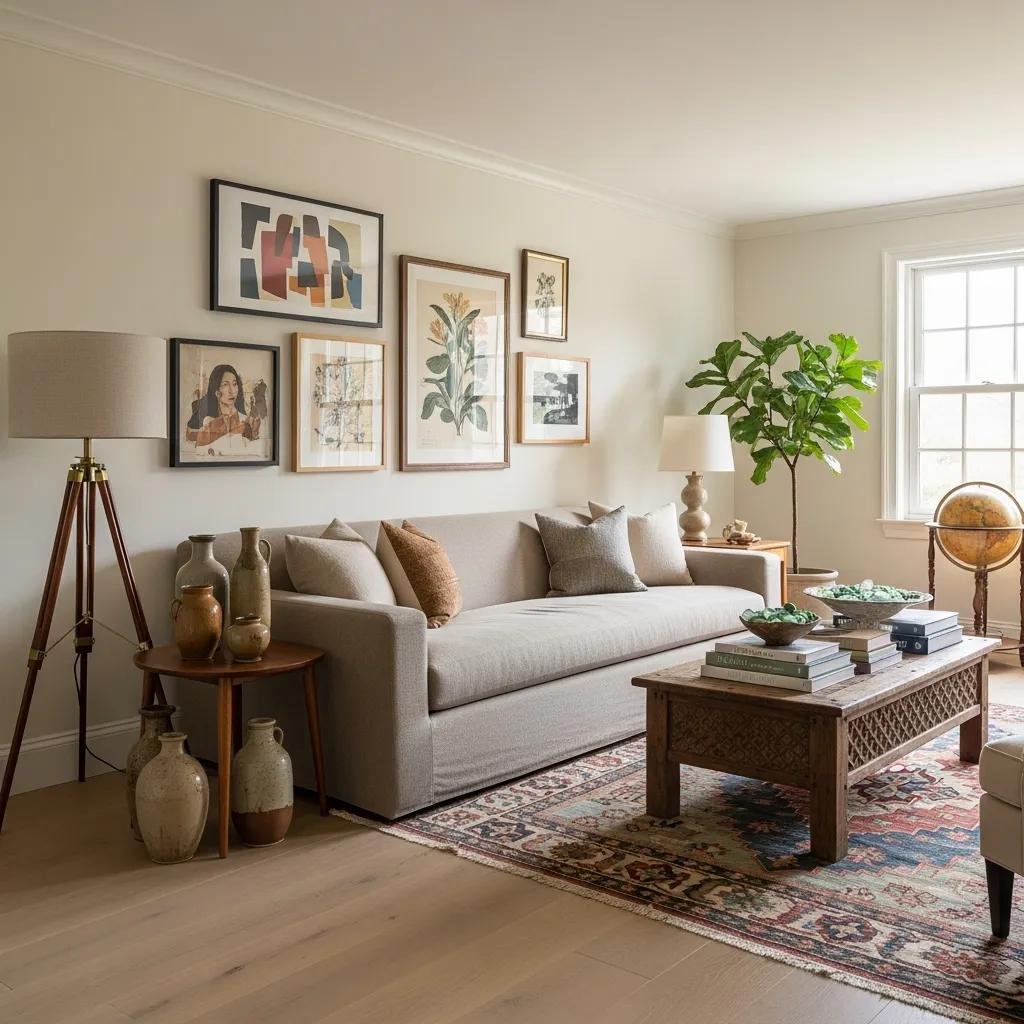
A cohesive foundation starts with restraint: neutral walls, durable flooring, and one or two substantial furniture anchors that establish scale and texture for later layers. This base acts as a visual canvas so eclectic accents read clearly instead of competing. It also simplifies renovation decisions about tile, hardwood, or luxury vinyl that must perform daily. Below is a quick comparison to help homeowners evaluate walls, floors, and major furniture choices during an eclectic remodel.
Choosing restrained, durable foundations creates the flexibility that eclectic layering needs, and it naturally leads into palette choices that support bold accents.
Which neutral palettes best support an eclectic look?
Neutral palettes for luxury eclectic interiors favor warm whites, soft greiges, or muted earth tones that let accent colors—emerald, plum, saffron—read as intentional rather than accidental. A warm base flatters brass and wood; a cooler gray suits chrome and deep blues. Pay attention to undertones when mixing patterned textiles. Introduce jewel tones selectively—upholstery, pillows, or art—and repeat one accent color across three elements to establish rhythm. These palette decisions inform material and finish choices during renovation planning and help future-proof the space.
Why do foundational elements matter in eclectic renovations?
Foundational elements—walls, cabinetry, flooring—shape durability, resale value, and the visual framework for layered decor. Their selection should be renovation-focused and long-lasting. High-quality tile and luxury vinyl flooring offer longevity and pattern options that can tie disparate elements together; hardwood adds warmth and resale appeal. Neutral, well-specified finishes reduce the need for early updates. Prioritizing durable surfaces in high-use areas ensures eclectic accents remain the focal point over time rather than being lost to wear. Thoughtful foundation choices make later mixing of pieces more reliable and visually cohesive.
What to master when mixing for an eclectic interior
Mastering eclectic decorating comes down to six practical elements: furniture selection, color strategy, pattern hierarchy, texture layering, lighting, and statement art. Each part functions within a system where repetition and proportion create coherence—repeating a metal finish or a color can unify very different silhouettes. Below is a compact material comparison to guide choices when pairing marble, velvet, and wood for a luxe eclectic look.
This material mix demonstrates how textures and finishes layer to produce refined depth without clutter, and it leads into practical rules for blending furniture styles and scales.
How to blend furniture styles without losing balance
Limit dominant silhouettes to two or three styles, repeat a finish or material to tie pieces together, and balance scale so no single item overwhelms the room. For example: pair a streamlined contemporary sofa with an antique side table and a modern accent chair, then echo brass hardware in lighting and small accessories. Arrange seating around a clear focal point—a fireplace, a statement rug—and vary heights to build visual rhythm. These tactics preserve the curated surprise of eclectic interiors while keeping the overall composition grounded.
How color, pattern, and texture create cohesion
Color is the tie that binds disparate pieces: repeat one or two accent hues across textiles, art, and accessories to produce harmony. Pattern mixing works when you vary scale—pair a large geometric rug with smaller floral pillows and a mid-scale striped throw—and keep a shared color thread. Texture adds tactile interest: pair velvet, rattan, and brushed metal so surfaces contrast without clashing. Applying these layering rules results in depth and luxury, and it prepares homeowners to specify materials during remodels with confidence.
How Scanbuild LLC brings your eclectic renovation to life
Scanbuild LLC delivers a design-build approach that turns eclectic concepts into high-quality renovations for luxury homes across the Washington, D.C. region. We combine local knowledge of DMV architecture with expertise in premium tile and luxury vinyl flooring so foundational decisions—from materials to custom millwork—are coordinated from the start. Our team manages the project end-to-end so clients can achieve personalized, curated interiors—mixing vintage treasures with new, bespoke pieces—without the usual coordination burden. If you want a seamless path from concept to completion, Scanbuild preserves your vision while delivering craftsmanship and durable material choices.
Kitchen ideas for upscale eclectic homes in Washington, D.C.
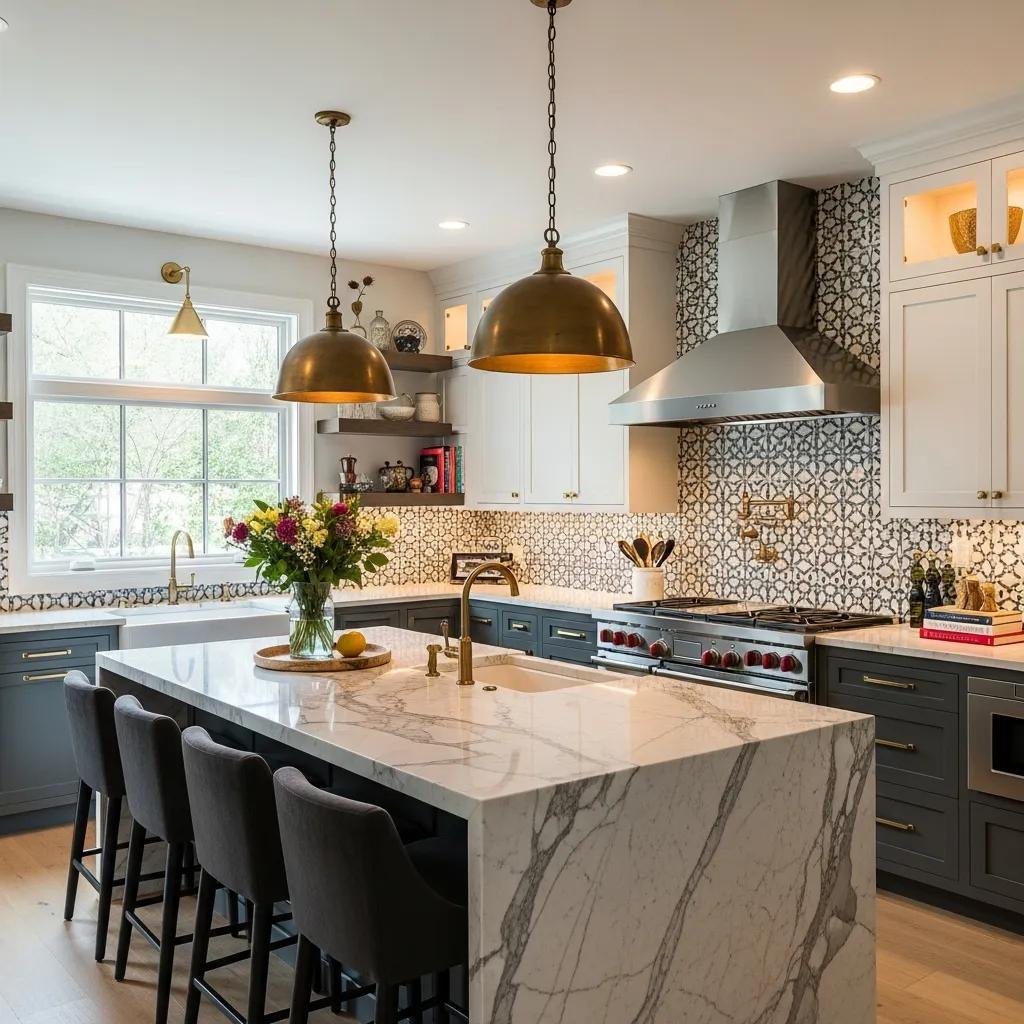
In the DMV, eclectic kitchens often mix cabinet finishes, a statement island, patterned tile backsplashes, and layered lighting to achieve polished, livable luxury. Practical ideas: two-tone cabinets (dark lowers, lighter uppers), a marble or honed-stone island as a focal point, and a patterned encaustic-style tile behind the range to tie colors together. The mini-table below compares typical components and why they work in an eclectic luxury kitchen.
These kitchen strategies translate eclectic layering into durable material choices that suit daily life while showcasing curated design—then extend naturally into bathroom and flooring solutions.
How Scanbuild crafts eclectic bathrooms and flooring solutions
We approach bathrooms with patterned tile layouts, boutique fixtures, and layered lighting to create boutique-luxury moments that feel custom. Floor and wet-area choices typically include high-end tile or luxury vinyl flooring for continuity and durability, while statement fixtures and varied tile scales create focused moments without overwhelming the space. Scanbuild prioritizes craftsmanship and material sourcing so patterns align and transitions are seamless—from concept to finished room. Homeowners benefit from a managed process that protects the eclectic vision while delivering durable, elegant finishes.
Frequently Asked Questions
What are common mistakes to avoid when designing an eclectic interior?
Common missteps include adding too many competing elements (which creates visual chaos), neglecting scale so pieces feel disjointed, and skipping a clear focal point. Keep dominant styles to a minimum, maintain a cohesive color thread, and establish one anchor so the room reads as intentional rather than cluttered.
How can I incorporate personal items into my eclectic design?
Choose a handful of meaningful objects—travel souvenirs, heirlooms, handmade pieces—and make them focal points. Group like items to create curated displays, dedicate a wall or shelf to a collection, and ensure these pieces share a color or material cue with the room so they feel integrated rather than incidental.
What types of lighting work best in eclectic interiors?
Layered lighting is essential: combine overhead fixtures (chandeliers or pendants) with task lights (table and floor lamps) and accent lighting to highlight art or architectural features. Choose at least one statement piece—vintage or contemporary—and use dimmable controls to adjust mood and function.
How do I choose the right accessories for an eclectic space?
Pick accessories that echo the room’s color or material palette. Repeat a couple of key colors or finishes across pillows, vases, and small decor to create rhythm. Mix textures—soft fabrics with metal or glass—and include one or two unexpected pieces that spark conversation and reflect your personal story.
What role does texture play in eclectic interior design?
Texture adds depth and tactility: combine plush fabrics, worn woods, and sleek metals to keep the eye moving. Layering different surfaces prevents visual flatness and makes a space feel inviting—think velvet upholstery, a woven rug, and metallic accents working together.
How can I ensure my eclectic design remains timeless?
Anchor the room with classic, high-quality pieces that adapt to changing trends. Limit ultra-trendy accessories, choose durable finishes for foundational elements, and maintain a consistent color thread. When in doubt, prioritize proportion and craftsmanship over novelty.
Any tips for mixing patterns effectively?
Use a unifying color palette and vary pattern scale: pair a large rug pattern with smaller pillow motifs and a medium-scale throw. Combine geometric and organic patterns for balance, and intersperse solids to give the eye a rest so the overall composition feels deliberate.
Expert Insights for Curated Eclectic Interiors
Eclectic interior design lets luxury homeowners create homes that tell their story while remaining composed and elegant. With a thoughtful foundation, disciplined palette choices, and careful mixing of furniture, pattern, and texture, you can achieve a layered, timeless interior. Partnering with an experienced design-build team like Scanbuild LLC ensures your vision is executed with quality materials and skilled craftsmanship. Ready to begin? Explore our services and let’s design an eclectic home that’s unmistakably yours.
Recent Comments